
Come On Home

Last night’s live broadcast was so powerful, I am truly moved by the messages I received from those who watched live and the replay.

Last night’s message focused on the prodigal son from Luke 15:11-23.

Before I started teaching, the Lord laid it on my heart to encourage the hearts of the people watching live and for those who will watch the replay. I felt a weight and burden for those who felt like they were breaking down, but the Lord gave me the word during the opening prayer, and that was “you’re not breaking down, you’re breaking through”.

In Luke 15:11-23, we read about two brothers, and the younger brother said to his father in verse 12, ” Father, give the portion of goods that falleth to me”. He was asking for his inheritance. An inheritance is only made available when the testator is dead, so in other words, he was telling his father, ‘I wish you were dead,’ which was a level of dishonour in the eyes of his community.

As we read on, we see the decline in his inheritance, identity, and dignity from verses 13-16. Here are a few principles I took from this parable of Jesus to His disciples about the prodigal son.

  1. When inheritance precedes process, it will always get wasted. It is in the process that maintenance is taught- vs 13- the prodigal son went into a far country and wasted his substance with “riotous” living- riotous in the Greek is “asotos”, which means to live ruinously. His ruinous life brought waste to his inheritance.

    2. He lost his identity and became a slave to someone else’s environment – vs 14-15.

    3. The prodigal son’s identity was tied to his inheritance- I am not just talking about the physical aspect of the inheritance. He carried a spiritual inheritance, and as long as he remained close to his father, there was a divine protection around him that kept him in the blessing. The minute he left that boundary, he became susceptible to the enemy’s blueprint for his life.

    4. He went to a far country- the bible does not specify where he travelled to, but he was far away from home, which led to his ruinous lifestyle.

    5. He lost his dignity, forgot his identity and joined himself to a native of that country and was sent to feed the wine- in the Jewish culture, that was the lowest form of employment. It was considered degrading to be near pigs. According to Jewish customs, it is unlawful for a man to eat or even touch a pig (Leviticus 11:7).

    6. He came to himself- he had gotten to such a low place- the lack and suffering brought him to a place of conviction and resolve- vs 15-16.

    7. What you do with the revelation of your perception is what determines your deliverance and breakthrough.

    8. The young son arose in vs 20- he came to a place of decision making- your deliverance starts with your decision. In other words, you are one decision away from your deliverance.

    9. His father saw him from a far off, had compassion and ran to him- I explained in the live broadcast last night that for a Jewish man to lift his tunic and show his feet and run, he actually degraded himself based on the status he had to go and get his son. In verse 20, this is two fold- it is a picture of what Jesus was getting ready to do on the cross. This son’s decision to humble himself and return, stirred up the father’s love for him. Because of the dishonour, he was actually guilty and was to be stoned by the community. So, his father’s running to him sent a direct message to the community that all was forgiven.

    10. In verse 22, we see three-dimensional restoration to the son. The father commanded the servants to bring the best robe, which represents his mantle and glory- his honour was being restored. Secondly, the father put a ring on his finger, his authority was being restored, and finally he told the servants to put shoes on his feet, this was the restoration of his freedom and his deliverance from being a slave and rebecoming a son again. This is what it looks like when God restores us from sin.

      The message of this blog and the live broadcast is simply to come home to the Father. God is waiting for you to come home and be restored back to your rightful place. This message was two-fold, whilst I was speaking to those in the world, this message was also for those who thought they hadn’t left home, they are still having an identity issue and have drifted far away from the position God has them. God is saying, “Come Back Home”. Come into alignment with what He has for you.

      Something I just sensed that I didn’t mention last night, the elder brother also had an identity issue. He failed to realise the position he held in his father’s house, so he got jealous of the younger brother’s celebration in verses 25-32.

      I want to encourage you if you don’t know Jesus as your Lord and Saviour, come to Him now. Your three-dimensional restoration awaits you.

      Prayer: Father, in the name of Jesus, I invite You into my heart as my Lord and Saviour. Father, I pray just like the prodigal son, when he came to himself, Lord, I recognise the mess I have been in. Lord, deliver me from the “pig-stye” lifestyle. Lord, restore the identity you have for me in me and take away the identity the enemy has projected onto me through sin. Lord, I thank You for the restoration. I thank You, Lord, for redeeming the time lost as a result of rebellion and disobedience. Heavenly Father, I ask You to please wash me in Your love, peace and joy. Father, just like You did for the prodigal son, Lord, restore my authority, my mantle and my destiny in You in Jesus’ Name I pray, Amen.

      Last Night’s Broadcast ‘Come On Home’– https://bit.ly/44pqkLt

      Website– www.dahna-estherfearon.com

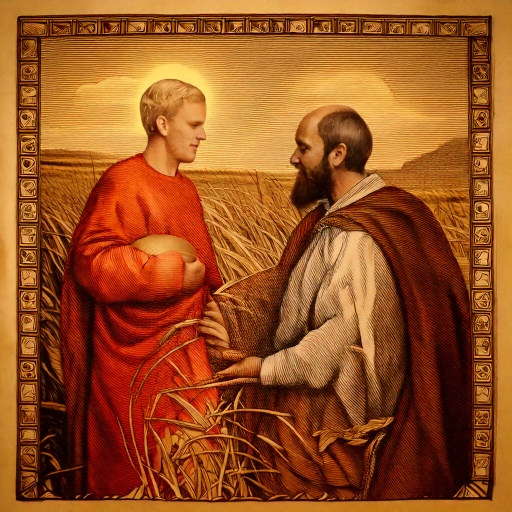
      An Enemy Had Done This

      Last night’s live focused on Matthew 13:24-30.

      This portion of scripture covered the parable of the wheat and the tares.

      Matthew 13:24-30 creates the scene where Jesus gives the parable of the wheat and tares. This parable dealt with a real-life experience encountered by farmers, especially when they were found to be unfriendly or unjust in their business dealings. An enemy would sow weeds (tares) in their fields, which would take years of work to eliminate.

      The Greek word for weed is zizanion, and this weed is a plant with the same sort of stalk and green colour as wheat while growing, but when it is fully grown and ripe, it has long ears and produces black and poisonous grain. If the grain is allowed to ripen fully, the seeds would fall into the soil and produce another crop of poison the following year.

      The servants noticed this whilst working in the field, where they noticed that as the crops came to the last stage of their growth, some began to look different as the heads began to form and grow longer than the wheat. They told the owner and suggested to the owner to uproot the tares. The issue at hand was that the tares were intermingled with the wheat, so the Sower suggested that they wait until harvest because trying to uproot the weeds will in fact, damage the wheat.

      Verses 36-43 give us the meaning of this parable- the field is the world,  the Sower of the good seeds is the Son of God, and the good seed represents the people of the kingdom of God, and the tares represent the sons of the kingdom of darkness.

      That is where we are right now in this current climate in the world; it is difficult to distinguish the difference between the people of God and the sons of the enemy. Right now, more than ever, God is encouraging us to sharpen our tools of discernment in this season.

      The key scripture I emphasised on last night was Matthew 13:25

      “But while men slept, his enemy came and sowed tares among the wheat and went his way”

      When we are asleep, we are at our most vulnerable. I spoke about how the enemy uses demonic infiltration, permeation, and intermingling to hijack and sabotage one’s destiny, and he does this through the dreamworld. He does this by sowing negative representation of either you to your destiny helper or of your destiny helper to you. He also sows seeds of perversion and evil through life’s circumstances. This scripture shows us prophetically how the enemy operates. He targets you at the earliest formative years, which, psychologically speaking, are from 0-6 years old, to create a faulty harvest in your life. Some demonic seeds lie dormant and do not show up until you are about to step into a destiny moment. Towards the end of the live video, I shared that the same how wheat has a root system,  humans also have a root system known as the nervous system and I prophetically taught how the enemy uses trauma and external circumstances as well as people ordained by him to sow tares (trauma) into your root system to sabotage the God ordained fruits that God has ordained to be harvested in your life.

      Prayer: Father in the Name of Jesus Christ, I pray that just like how the enemy sowed weeds amongst the wheat in Your Word, Father, I pray to uproot every demonic seed lying dormant in my life. Father, in the name of Jesus Christ, destroy every time-released demonically generated event in my life. Father, I pray in the name of Jesus Christ to reset my root system and may every good seed that You have planted in my life, may good fruit come forth at the time of Harvest. Father, every tare causing sabotage and hindrance in my life in the form of frenemies, Lord uproot them now in the name of Jesus Christ and remove them from my life. Father, I thank You that You have heard this prayer in Jesus’ Name, I pray, Amen.

      To watch last night’s replay, here is the link https://bit.ly/4l6VPje

      Your Obedience Carries A Sound

      Last night’s live, I focused on the importance of pivoting in this season. The word pivot has different meanings depending on the context. The general meaning of a pivot is a fixed point that something turns or rotates around. From a business context, to pivot, means to change direction or strategy in response to circumstances. To pivot is a change in focus or direction.

      The focus scripture was taken from 2 Kings 7:3-19. Here are a few nuggets from that scripture. The focus scripture was taken from 2 Kings 7:3-19. Here are a few nuggets from that passage of scripture:

      • The lepers were a people who, because of the condition they dealt with in their bodies, society ostracised them and considered them unclean, so they lived at the entrance of their gate to Samaria (vs3).
      • The pivot of the four lepers started with a decision
      • They rose at twilight, just after sunset or sunrise. In the live video, I said midnight, so I would like to correct that error here.
      • As they stepped out by faith, God amplified the sound of their footsteps
      • Because of their pivot, a whole nation ate (vs 8-18)- this pivotal decision and risk made by the lepers was on the back of the poverty the nation was experiencing at the time. Read 2 Kings 6 to gain more clarity.
      • To pivot, you have to have a transformed mind (Romans 12:2)

      Prayer: Father, in the name of Jesus, I ask You, Lord, to empower me to obey Your instructions concerning my purpose and destiny in You. Lord, help me to understand that by faith, as I step out, you are amplifying my footsteps. Lord, lead me to the place of provision that those in my vicinity and proximity will be blessed. Father, I thank You for hearing me and for blessing me. Father, I repent of every disobedience. Lord, I ask for your mercy to realign me with my destiny in you, and where I have missed out on breakthroughs because I refused to pivot. Lord, I recall the opportunity and moment for me to pivot in Jesus’ Name, I pray, amen.

      Watch the replay of my YouTube Video- ‘Your Obedience Carries A Sound ‘- https://bit.ly/3ZGL3aN

      God’s Outcome- Part 2

      On last night’s live, I continued exploring the meaning of God’s outcome and what it means to understand the difference between God’s perfect will, His general will, and God’s permissive will.

      God’s perfect will, general will, and permissive will are theological categories that are used to understand how God relates to our choices, His divine sovereignty, and moral guidance. We see the perfect will of God in the scriptures, but the terms general and permissive will have not been seen in the scriptures; however, some scriptures clearly explain and define the difference between the three wills of God.

      1 God’s Perfect Will

      God’s perfect will refers to His ideal plan, desire, and sovereign intention for creation and individuals. God’s perfect will is always good, flawless, and unchanging. It reflects God’s best for us, which aligns perfectly with His holiness and purpose.

      Romans 12:2 says:

      “And be not conformed to this world: but be ye transformed by the renewing of your mind, that ye may prove what is that good and acceptable and perfect will of God”.

      Romans 12:1-2 shows us six things that constitute the perfect will of God in our lives;

      1 Present your bodies as a living sacrifice to God (Romans 12:1, 1 Corinthians 3:16-17; 1 Corinthians 6:20).

      2 Make the body holy (Romans 12:1; 2 Corinthians 7:1)

      3 Make yourself acceptable to God (Romans 12:1)

      4 Render reasonable service (Romans 12:1)

      5 Be not conformed to the world (Romans 12:2)

      6 Be transformed from the world (Romans 12:2)

      The Greek word for “perfect” in Romans 12:2 is teleios, which translates as “that which has reached its end; nothing more to complete it”. When it comes to the perfect will of God concerning your life, there is a completion. When God’s perfect will is done in your life, there is nothing more to add or take away. It’s all complete.

      Other scriptures to study the perfect will of God are Ephesians 1:4-5 and Jeremiah 29:11

      God’s perfect will is what He ideally wants for His people: righteousness, obedience, and relationship with Him.

      2 God’s General Will

      God’s general will refers to his commands and what He expects from people. This includes upholding the commands of His Holy Word, including living righteously, loving others, and accepting salvation through Jesus Christ. It is revealed in scripture and applies to everyone.

      Scriptures

      1 Thessalonians 4:3, 1 Thessalonians 5:16-18, Micah 6:8, John 6:40

      God’s general will be accessible to all and does not depend on individual circumstances- it’s found in His word and is about how all people should live.

      3 God’s Permissive Will

      God’s permissive will refers to what God allows to happen, though this may not be His ideal or perfect desire. He permits human choices, even sinful ones, without violating your human free will. Yet He still works through them to accomplish His ultimate purposes.

      Scriptures

      Romans 8:28, Genesis 50:20, 1 Samuel 8:6-9

      God’s permissive will acknowledges human freedom. He may allow choices that are outside His perfect will, but He still maintains sovereignty and can redeem even the worst situations.

      Prayer: Father, in the name of Jesus, help me to know and discern the difference between your perfect, general, and permissive will. Father, I repent for every time I stepped outside of your perfect will. Lord, deliver me from the consequences of the decision I made as a result of my permissive will. Father, I pray to wash me in your living waters and the blood of Jesus Christ. Father, refresh my soul from the brokenness of my disobedience in Jesus’ Name, I pray, amen.

      You can catch the replay here: https://bit.ly/45p4clq